ചരിത്രപരമായ വഴിത്തിരിവ്: ജനനനിരക്ക് ആദ്യമായി റിപ്ലേസ്മെന്റിന് താഴെ
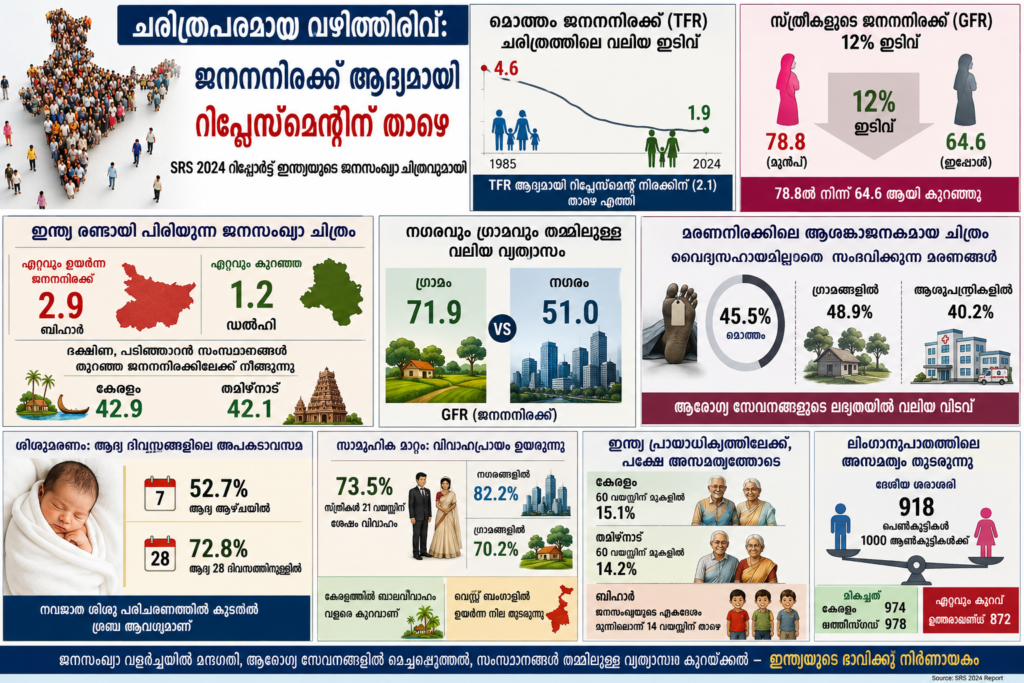
ഇന്ത്യയുടെ ജനസംഖ്യാ വളർച്ചയിൽ വലിയ മാറ്റം രേഖപ്പെടുത്തിയതായി SRS 2024 റിപ്പോർട്ട് വ്യക്തമാക്കുന്നു. മൊത്തം ജനനനിരക്ക് (TFR) ആദ്യമായി റിപ്ലേസ്മെന്റ് ലെവലിന് താഴേക്ക് പോയി, 1.9 ആയി കുറഞ്ഞു, 1985ൽ ഇത് 4.6 ആയിരുന്നു.
സ്ത്രീകളുടെ ജനനനിരക്ക് (GFR) 78.8ൽ നിന്ന് 64.6 ആയി കുറഞ്ഞത് 12 ശതമാനം ഇടിവ് സൂചിപ്പിക്കുന്നു.
ഇന്ത്യ രണ്ടായി പിരിയുന്ന ജനസംഖ്യാ ചിത്രം
റിപ്പോർട്ടിലെ ഏറ്റവും പ്രധാന കണ്ടെത്തൽ സംസ്ഥാനങ്ങളിലിടയിലെ വലിയ വ്യത്യാസമാണ്.
ഏറ്റവും ഉയർന്ന ജനനനിരക്ക്: ബിഹാർ 2.9
ഏറ്റവും കുറഞ്ഞത്: ഡൽഹി 1.2
ദക്ഷിണ, പടിഞ്ഞാറൻ സംസ്ഥാനങ്ങൾ കുറഞ്ഞ ജനനനിരക്കിലേക്ക് നീങ്ങുന്നു.
ഇത് ഇന്ത്യയിൽ രണ്ടു വ്യത്യസ്ത ജനസംഖ്യാ യാഥാർത്ഥ്യങ്ങൾ രൂപപ്പെടുന്നതായി കാണിക്കുന്നു.
നഗരവും ഗ്രാമവും തമ്മിലുള്ള വലിയ വ്യത്യാസം
ജനനനിരക്കിലും ആരോഗ്യ സൂചകങ്ങളിലും നഗര-ഗ്രാമ വ്യത്യാസം വ്യക്തമാണ്.
ഗ്രാമ GFR: 71.9
നഗരം GFR: 51.0
ബിഹാർ പോലുള്ള സംസ്ഥാനങ്ങളിൽ ഉയർന്ന നിരക്ക് തുടരുമ്പോൾ ഡൽഹി വേഗത്തിൽ താഴേക്ക് പോകുന്നു.
മരണനിരക്കിലെ ആശങ്കാജനകമായ ചിത്രം
ഇന്ത്യയിലെ മരണങ്ങളുടെ വലിയൊരു പങ്ക് ഇപ്പോഴും വൈദ്യസഹായമില്ലാതെ സംഭവിക്കുന്നു.
45.5 ശതമാനം മരണങ്ങൾ മെഡിക്കൽ സഹായമില്ലാതെ
ഗ്രാമങ്ങളിൽ 48.9 ശതമാനം
ആശുപത്രികളിൽ 40.2 ശതമാനം മാത്രം
ഇത് ആരോഗ്യ സേവനങ്ങളുടെ ലഭ്യതയിൽ വലിയ വിടവ് കാണിക്കുന്നു.
ശിശുമരണം: ആദ്യ ദിവസങ്ങളിലെ അപകടാവസ്ഥ
ശിശുമരണത്തിന്റെ വലിയ പങ്ക് ആദ്യ ദിവസങ്ങളിൽ തന്നെ സംഭവിക്കുന്നു.
52.7 ശതമാനം ആദ്യ ആഴ്ചയിൽ
72.8 ശതമാനം ആദ്യ 28 ദിവസത്തിനുള്ളിൽ
നവജാത ശിശു പരിചരണത്തിൽ കൂടുതൽ ശ്രദ്ധ ആവശ്യമാണ്.
സാമൂഹിക മാറ്റം: വിവാഹപ്രായം ഉയരുന്നു
73.5 ശതമാനം സ്ത്രീകൾ 21 വയസ്സിന് ശേഷം വിവാഹം
നഗരങ്ങളിൽ 82.2 ശതമാനം
ഗ്രാമങ്ങളിൽ 70.2 ശതമാനം
കേരളത്തിൽ ബാലവിവാഹം വളരെ കുറവാണ്, വെസ്റ്റ് ബംഗാളിൽ ഉയർന്ന നില തുടരുന്നു.
ഇന്ത്യ പ്രായാധിക്യത്തിലേക്ക്, പക്ഷേ അസമത്വത്തോടെ
കേരളം 60 വയസ്സിന് മുകളിൽ 15.1 ശതമാനം
തമിഴ്നാട് 14.2 ശതമാനം
ബിഹാർ ജനസംഖ്യയുടെ ഏകദേശം മൂന്നിലൊന്ന് 14 വയസ്സിന് താഴെ
ഒരു ഭാഗത്ത് പ്രായാധിക്യം, മറുവശത്ത് യുവജനസംഖ്യ.
ലിംഗാനുപാതത്തിലെ അസമത്വം തുടരുന്നു
ദേശീയ ശരാശരി 918 പെൺകുട്ടികൾ 1000 ആൺകുട്ടികൾക്ക്
മികച്ചത് കേരളം 974, ഛത്തീസ്ഗഡ് 978
ഏറ്റവും കുറവ് ഉത്തരാഖണ്ഡ് 872
ജനനനിരക്കിൽ ചരിത്രപരമായ ഇടിവ്
ഇന്ത്യയുടെ മൊത്തം ജനനനിരക്ക് (TFR) ആദ്യമായി “പുനഃസ്ഥാപന നിരക്കിന് താഴെ” എത്തിയിരിക്കുകയാണ്. 1985-ൽ 4.6 ആയിരുന്ന നിരക്ക് 2024-ൽ 1.9 ആയി കുറഞ്ഞു. ഇത് രാജ്യത്ത് ജനസംഖ്യാ ഘടനയിൽ വലിയ മാറ്റം വരുന്നതിന്റെ സൂചനയാണ്.
ഈ ഇടിവ് ഏകീകൃതമല്ല. ചില സംസ്ഥാനങ്ങളിൽ ജനനനിരക്ക് ഇപ്പോഴും ഉയർന്ന നിലയിലാണ്, ചിലിടങ്ങളിൽ അതിവേഗം താഴ്ന്ന നിലയിലേക്ക് എത്തിയിട്ടുണ്ട്.
വടക്ക്–തെക്ക് വിഭജനം: ജനനനിരക്കിലെ വലിയ അസമത്വം
രാജ്യത്തിന്റെ ജനസംഖ്യാ ഭൂപടം തന്നെ മാറുന്ന തരത്തിലുള്ള വ്യത്യാസമാണ് റിപ്പോർട്ട് കാണിക്കുന്നത്.
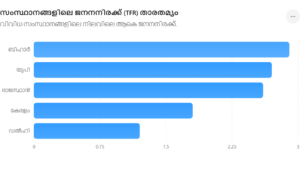
ബിഹാർ: 2.9
ഉത്തർപ്രദേശ്: 2.7
രാജസ്ഥാൻ: 2.6
കേരളം: 1.8
ഡൽഹി: 1.2
വടക്കൻ സംസ്ഥാനങ്ങളിൽ ഉയർന്ന ജനനനിരക്ക് തുടരുമ്പോൾ, തെക്കൻ സംസ്ഥാനങ്ങൾ വളരെ താഴ്ന്ന നിലയിലാണ്.

ഗ്രാമ–നഗര വ്യത്യാസം: ജീവിത സാഹചര്യങ്ങളുടെ പ്രതിഫലനം
ജനനനിരക്കിന്റെ മാറ്റം ഗ്രാമ–നഗര മേഖലകളിലും വ്യക്തമായി കാണാം.
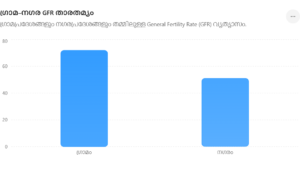
ഗ്രാമം: 71.9
നഗരം: 51.0
ഗ്രാമപ്രദേശങ്ങളിൽ ജനനനിരക്ക് കൂടുതലാണ്, നഗരങ്ങളിൽ അത് കുറവാണ്.

മരണങ്ങളിൽ മെഡിക്കൽ സഹായത്തിന്റെ കുറവ് തുടരുന്നു
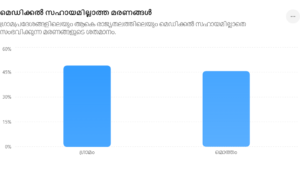
ചികിത്സ ലഭിക്കാതെ സംഭവിക്കുന്ന മരണങ്ങൾ ഇപ്പോഴും ഉയർന്ന നിലയിലാണ്.
ഗ്രാമം: 48.9%
മൊത്തം: 45.5%
ഇത് ആരോഗ്യസേവനങ്ങളിലെ പ്രാപ്യതയിലെ വ്യത്യാസം വ്യക്തമാക്കുന്നു.

സാമൂഹിക മാറ്റങ്ങളുടെ സൂചനകൾ
റിപ്പോർട്ട് കാണിക്കുന്നത് ഇന്ത്യയിൽ:
ജനസംഖ്യാ വളർച്ച മന്ദഗതിയിലാകുന്നു
ചില സംസ്ഥാനങ്ങൾ “പ്രായമേറിയ സമൂഹം” ആയി മാറുന്നു
ചില സംസ്ഥാനങ്ങൾ ഇപ്പോഴും “യുവ ജനസംഖ്യ” നിലനിർത്തുന്നു